PSMD NEWSLETTER
Is Your Protein Bar Lying About Its Protein? A Doctor Explains...
June 5, 2026
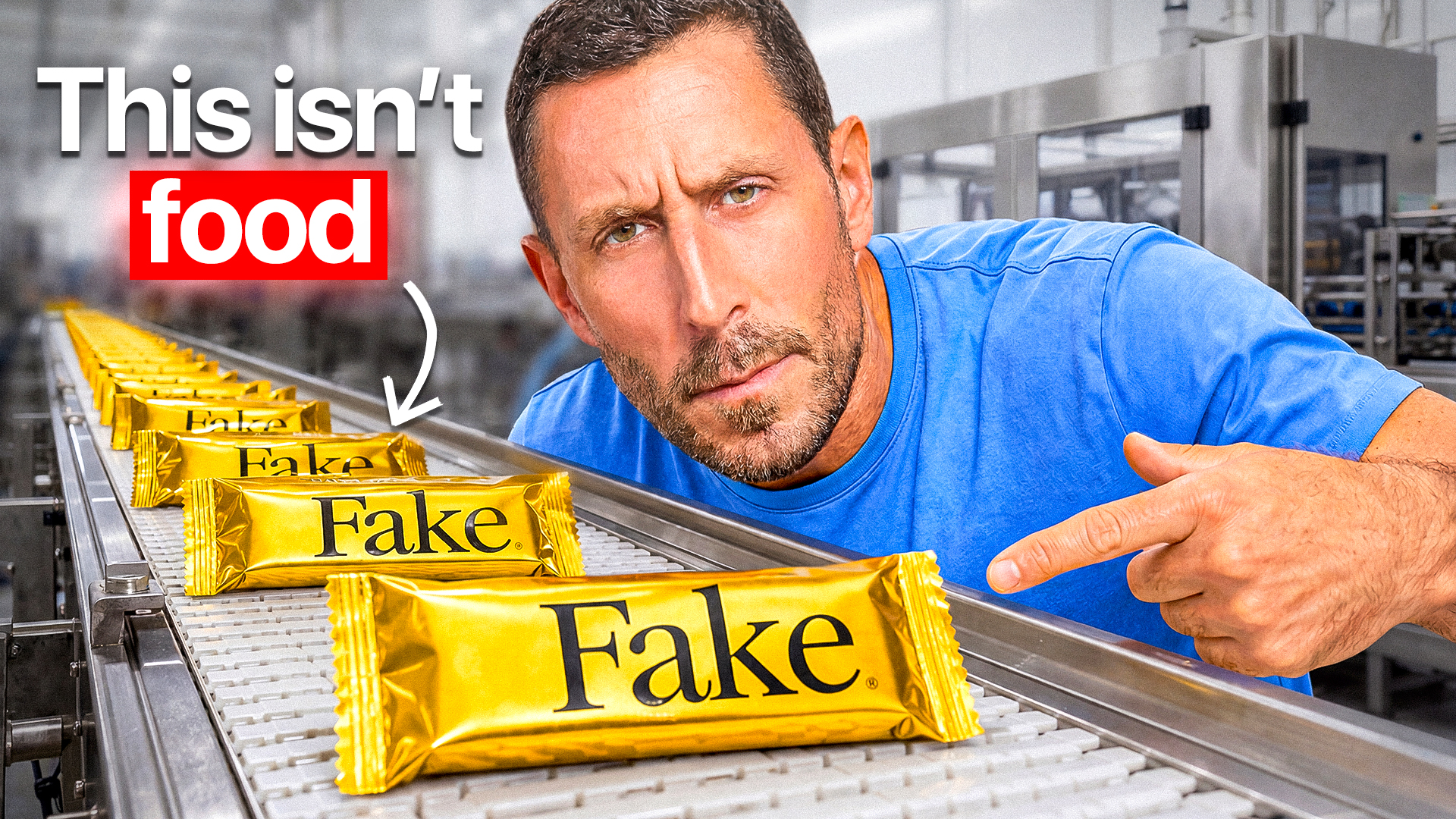
You look at the number in large font on the front: 20g. 25g. 30g of protein. Great! You grab the bar, you feel responsible, you move on with your day.
But that number measures one thing: how much protein went into the bar. It says nothing about how much your body can actually pull back out.
And new research says that for a lot of bars, the answer is: not much...

I'm a board-certified physician-turned functional medicine expert, and the author of The Carnivore Code. I've spent the last decade researching ancestral nutrition, biochemistry, and evolutionary biology, and sharing my knowledge with millions across social media. I've treated thousands of patients and spoken with the top health experts in the world.
And I want to walk you through the study that should have made headlines this year and didn't, because it exposes the quietest scam in the protein aisle.
Here's what the industry counts on you not knowing. A "gram of protein" on a label only measures content. It says nothing about quality. The rules let a bar count protein that's incomplete, poorly absorbed, or stripped down to a powder, and still print a big, impressive number on the front.
Two things actually decide whether protein does anything for you. First, is it complete, meaning it has all nine essential amino acids your body can't make on its own. Second, can your body absorb it. The cheapest way to hit a headline number is to use protein that fails one or both, and hope you never look closer.
Using a grass-fed whey protein is ideal, just like we did with the Lineage Bar.
Pea, rice, and soy are the workhorses of the cheap protein world. The problem is that most single plant proteins are incomplete, missing or short on key amino acids, and your body absorbs them far less efficiently than protein from real dairy or meat. Brands blend pea and rice together to patch the holes, but a patched-up plant blend is still a workaround, not real, usable protein.
So a "20g plant protein" bar and a "20g whey" bar are not the same purchase. One feeds your body. One mostly feeds the label.
We used highly absorbable grass-fed whey in the Lineage Bar.
"Isolate" sounds premium. What it really means is protein blasted and processed until everything but the protein is stripped away. You're left with an industrial powder, divorced from the whole food it came from and the nutrients that came with it. A real-food protein concentrate keeps more of that food matrix intact. The label rarely explains the difference, because the difference doesn't help them.
Stop reading the front, the big number is marketing. Turn the bar over and read where the protein actually comes from. This is the filter I use, and the one I'd teach my own family.
Protein that delivers:
Protein that fakes the number:
The rule is simple. Real, complete protein from dairy and eggs is the kind your body can absorb and use. Cheap plant isolates and stripped-down powders are the kind it largely passes through. The grams can match. The result in your body does not.
This is exactly why my friend Dr. Anthony Gustin, DC and I built the Lineage Bar the way we did.
Its 20g of protein comes from grass-fed whey and milk protein concentrate, complete, highly absorbable, real dairy protein. No plant isolates. No pea or rice filler. No stripped-down powders. We add grass-fed collagen on top for the skin and joint support it's known for, and the whole thing stays under 200 calories with minimal processing.
It's 20g of protein your body can actually use, not 20g of protein math. Try the Mixed Berry or the Chocolate and feel the difference of real, complete protein.
No. Two bars can both say "20g protein" and deliver very different amounts of usable protein. It comes down to the source: whether it's a complete protein and how well your body can absorb it. Quality matters as much as the number on the front.
Most single plant proteins, like pea, rice, and soy, are incomplete, meaning they're missing or low in certain essential amino acids, and your body generally absorbs them less efficiently than protein from dairy, eggs, or meat. They can still contribute, but they're not an equal swap for complete animal protein.
An isolate is processed further to strip away nearly everything but the protein. A concentrate keeps more of the original food matrix and the nutrients that come with it. Both can be high in protein, but a concentrate is closer to real food and less industrially processed.
A complete protein contains all nine essential amino acids your body cannot produce on its own. Whey, milk protein, eggs, and meat are complete. Most single plant proteins are not.
Grass-fed whey and milk protein concentrate, both complete and highly absorbable, with grass-fed collagen added for skin and joint support. No plant isolates, no pea or rice filler, and no stripped-down protein powders.
A protein bar should give your body protein it can actually use, not a number that looks good in an app. Every Lineage product is built on traceable, regeneratively raised ingredients and third-party tested for purity. We lead with complete, highly absorbable protein, and we tell you exactly where it comes from. Test, don't guess.
Flip the bar over and read the protein source, not just the number. If the grams come from pea, rice, or a mystery blend, your body is leaving most of it on the table.
Try the Lineage Bar and get 15% off with code PAUL.
Eat like a human.– Dr. Paul Saladino, MD

